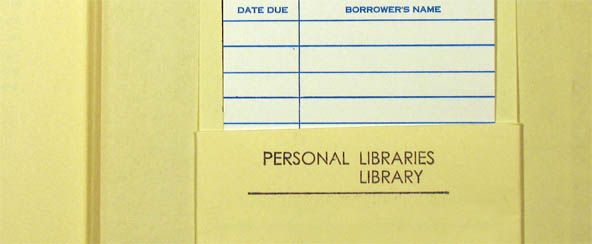

There are many new acquisitions for Spring 2014, mostly from the Robert Smithson Collection. Each new book and their first sentence is listed below, and starting with:
1. The Language of Magic and Gardening by Bronislaw Malinowski:
The linguistic problem before the ethnographer is to give as
full a presentation of language as of any other aspect of culture.
2. Seven Types of Ambiguity by William Empson:
An ambiguity, in ordinary speech, means something very
pronounced, and as a rule witty or deceitful.


3. Changing: Essays in Art Criticism by Lucy Lippard: (seen above)
André Ferminier writes: “What has perhaps been most damaging
to the art critic is the prodigious gobbledygook that with him takes the place
of vocabulary; and the prefaces to exhibition catalogs in particular would
provide a classic anthology of the art of saying nothing.”
4. The Human Use of Human Beings: Cybernetics and Society by
Norbert Wiener:
The beginning of the twentieth century marked more than the
end of one hundred-year period and the start of another.

5. Logic Machines & Diagrams by Martin Gardner: (seen above)
A logic machine is a device, electrical or mechanical,
designed specifically for solving problems in formal logic.


6. Field Book of Ponds and Streams by Ann Haven Morgan: (seen above)
Minnows and frogs and brown water beetles, scurrying to
cover as we approach the shore of a still clear pond, show us that the water
has some very lively inhabitants.
7. The Modern Technique of Rock Blasting by U. Langefors and B.
Kihlström:
Within some thousandths of a second after the initiation of
the explosive there occurs in a charged hole a series of events which, in drama
and violence, have few equivalents in civil technology.

8. The Message of the Stars by Max and Augusta Heindel: (seen above, outside + next to its dust jacket)
It is a matter of common knowledge among mystics that the
evolutionary career of mankind is indissolubly bound up with the divine
hierarchies who rule the planets and the signs of the Zodiac, and that the
passage of the Sun and the planets through the twelve signs of the Zodiac,
marks man’s progress in time and in space.

9. Field Book of Seashore Life by Roy Waldo Miner: (seen above and with Message of the Stars)
Protozoa are single-celled animals.

High among the list of reasons people love to visit Hawaii
is the lovely tropical foliage to be enjoyed everywhere and at all times of the
year.
11. Geography Made Easy by Jedidiah Morse: (from the Maria Mitchell Library)
Geography is a science, which describes the figure, motion,
magnitude, and component parts of the earth; the situations, extent, and
appearances of the various parts of its surface; its productions animal and
vegetable; its natural and political divisions; and the history, manners,
customs, and religion of its inhabitants.
For any questions about the Library, Collections or books, please contact the Librarian at
personallibraries{at}gmail{dot}com.


 Posts

